01The Quiet Giant of Global Industry
Ceramics rarely make headlines the way silicon chips or carbon fibre do, yet the sheer volume of ceramic material manufactured each year dwarfs most other industrial outputs. In 2016, three product categories — wall and floor tiles, sanitary ware, and refractory ceramics — dominated global output, together forming the backbone of a sector shaped by two unstoppable forces: rapid urbanisation across the developing world, and the relentless demand for higher-performance materials in heavy industry. Add fiberglass composites and advanced ceramic coatings to the picture, and the full scope of what humanity was firing, glazing, and sintering that year becomes genuinely staggering.
Understanding why these categories surged requires understanding what ceramics actually are. By definition, ceramics are inorganic, non-metallic solids shaped and hardened by heat — a category that spans everything from a hand-thrown earthenware pot to the heat-resistant lining of a steelmaking furnace. It is precisely this versatility, rooted in the chemistry of oxides, carbides, and nitrides, that makes ceramic materials so hard to replace at the industrial scale.
02Wall and Floor Tiles: The Volume Leader
No ceramic product came close to tiles in 2016. Global demand reached an estimated 21.8 billion square metres, a figure that strains the imagination — enough to cover a significant fraction of a small country. Residential replacement was the leading application: homeowners and developers alike were pulling up ageing flooring and substituting ceramic and porcelain tiles, drawn by their durability, low maintenance requirements, and the growing cultural association between hard surfaces and hygienic living.
Floor tiles, in particular, made significant inroads against hardwood alternatives. Where timber requires periodic refinishing and is vulnerable to moisture, a vitrified ceramic tile — fired at high temperature until glassy and essentially non-porous — resists staining, water, and heavy foot traffic for decades. The economics were compelling in both mature Western markets, where renovation activity was buoyant, and in fast-growing cities across Asia, Africa, and Latin America, where new residential construction was adding millions of dwellings every year.
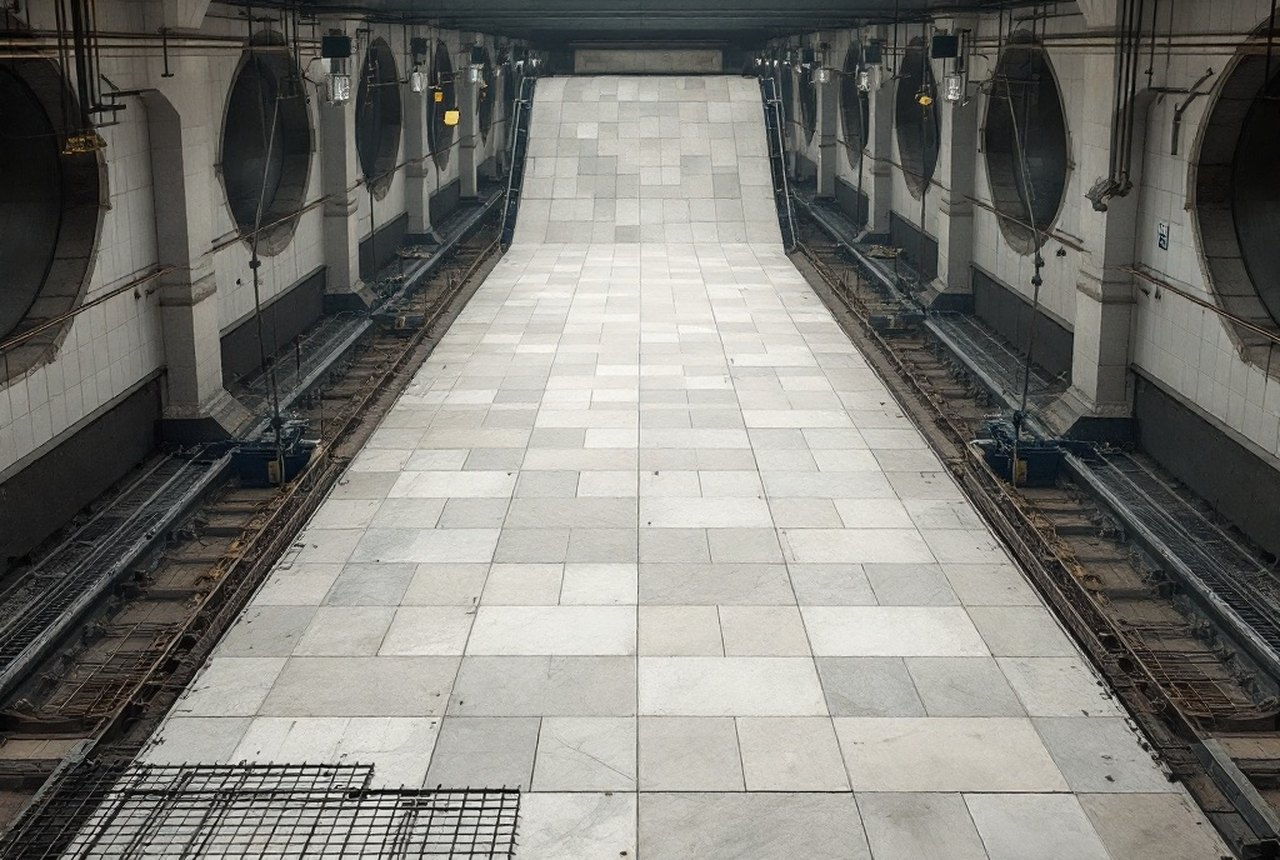
Transit infrastructure was another significant end-use segment. Metro systems, airports, and public concourses from Beijing to Brussels were tiling vast expanses of wall and floor — not merely for aesthetics, but because ceramic surfaces are cheap to clean, structurally stable, and effectively permanent under normal use. The sheer breadth of these applications explains why tiles command such a dominant position in the global ceramics market.
03Sanitary Ware: Riding the Construction Wave
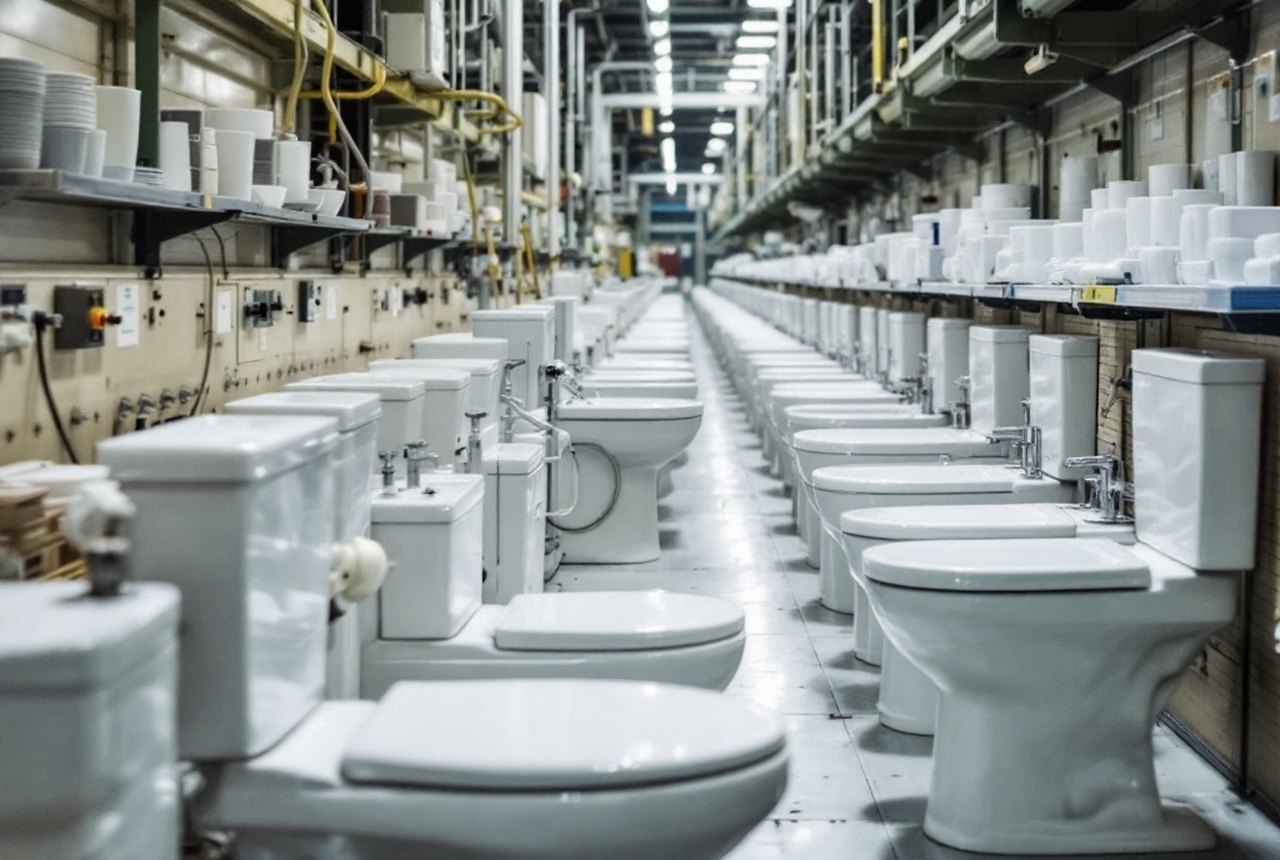
The sustained global wave of residential construction and home renovation that characterised the mid-2010s pushed sanitary ware production well above the 349 million pieces recorded in a 2014 industry baseline — and demand showed no sign of plateauing through 2016. Toilets, basins, bidets, and shower trays are overwhelmingly made from vitrified ceramic, chosen for exactly the same reasons that make tiles attractive: hardness, chemical inertness, ease of cleaning, and a surface that resists the microbial accumulation that plagues porous materials.
Rising sanitation standards in the Global South were a particularly important driver. As governments and developers invested in housing stock with indoor plumbing, demand for affordable, durable sanitary ware expanded dramatically across South and Southeast Asia, sub-Saharan Africa, and parts of Latin America. At the same time, premium segments in Europe and North America were generating demand for design-forward pieces — evidence that this category serves both the most basic human needs and the most rarefied aesthetic preferences simultaneously.
Chronology
- 2014sanitary ware production baseline of 349 million pieces recorded
- 2016tile demand peaks at 21.8 billion m²; fiberglass and coating sectors show strong growth
- 2020projected refractory output target of 55 million tonnes
04Refractory Ceramics: The Unsung Workhorse of Heavy Industry
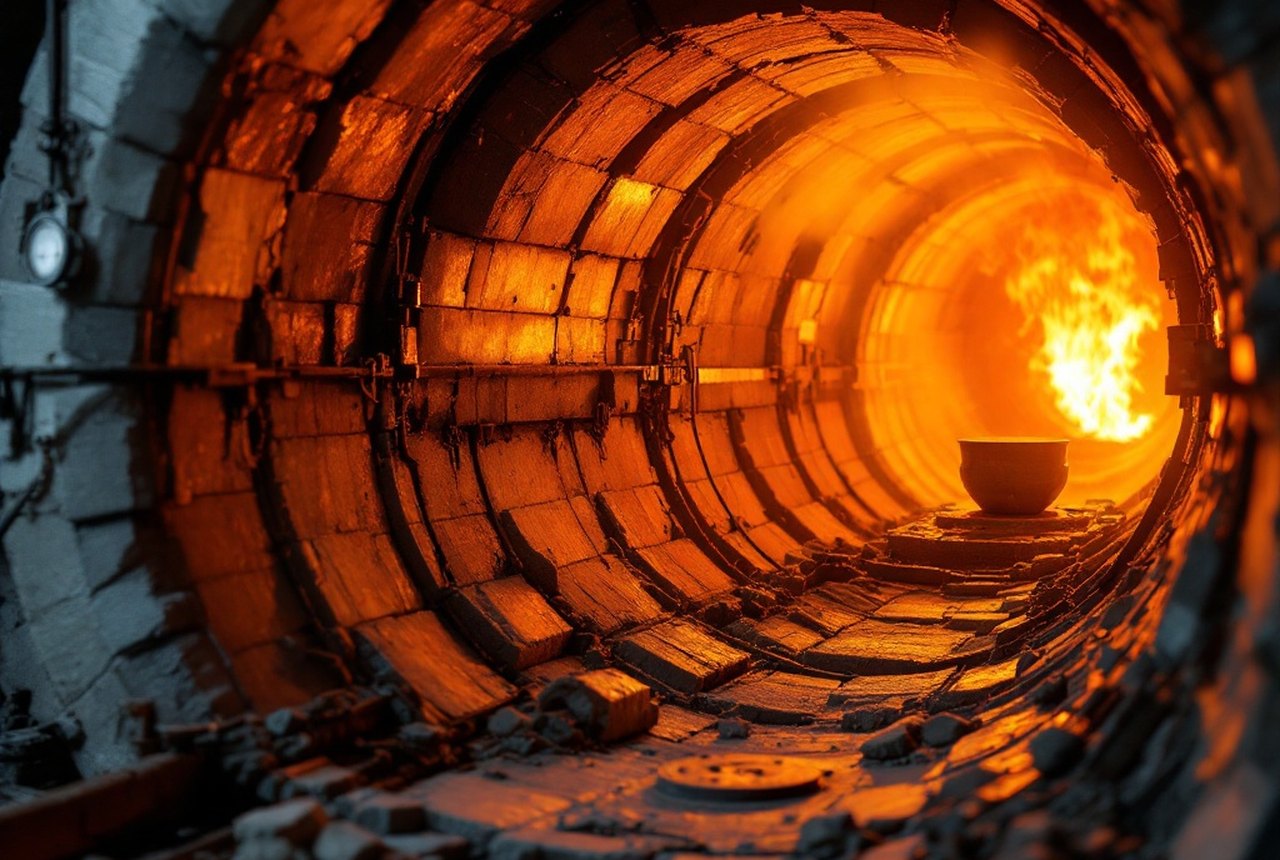
While tiles and sanitary ware are the ceramics most people encounter in daily life, refractory ceramics are arguably more economically critical. These are heat-resistant ceramic materials used to line the interiors of furnaces, kilns, and reactors — environments where temperatures may reach well above 1,000°C and where virtually no metal could survive prolonged exposure. Without refractories, modern steelmaking, glassmaking, and cement production would be impossible.
In 2016, global refractory output was on a trajectory toward a projected 55 million tonnes by 2020, driven by expansion in all three of those heavy industries. Steel production in particular — concentrated in China, India, and other industrialising economies — required enormous volumes of refractory brick and castable material, which must be periodically replaced as the intense heat and chemical environment erodes even these highly engineered ceramics over time. The replacement cycle itself guarantees a steady baseline of demand regardless of broader economic conditions, giving the refractory sector a resilience that more discretionary categories lack.
The term refractory encompasses a wide family of materials: high-alumina bricks, silica refractories, magnesia-based compounds, and various speciality blends engineered for specific temperature ranges and chemical exposures. What they share is the fundamental ceramic property of stability under conditions that would destroy almost anything else — a reminder that the most critical industrial ceramics are often the ones least visible to the public.

05Speciality Segments: Fiberglass and Ceramic Coatings
Beyond the three dominant categories, two speciality segments demonstrated robust growth in 2016 and pointed toward the direction the industry was heading. Fiberglass — technically a ceramic composite of glass fibres bound in a polymer matrix — saw strong output across Europe, North America, and the Asia-Pacific region, driven by automotive lightweighting programmes and general engineering applications where strength-to-weight ratio matters more than cost alone.
Ceramic coatings represented perhaps the most technically dynamic sub-sector. These thin-film coatings — comprising oxide, carbide, and nitride chemistries — are applied to metal substrates to impart hardness, wear resistance, thermal protection, and chemical inertness far beyond what the underlying metal could achieve alone. Oxide ceramics led consumption in 2016 and were also the fastest-growing sub-segment heading into subsequent years, driven by demand from the automotive, energy, defence, and healthcare industries. In a turbine blade, an engine cylinder, or a surgical instrument, a ceramic coating measured in microns can extend operational life by orders of magnitude — a compelling value proposition that needs no further marketing.
Taken together, these five categories — tiles, sanitary ware, refractories, fiberglass composites, and ceramic coatings — paint a portrait of an industry that is at once ancient and relentlessly modern. The same fundamental act of hardening inorganic material with heat that produced the first pottery vessels thousands of years ago now underpins the manufacture of billions of square metres of flooring, the lining of steel converters, and the protective coatings on jet engine components. Scale and sophistication have changed beyond recognition; the core chemistry has not.