01More Than Mud and Tile
Ask most people to picture a ceramic, and they'll conjure a flower vase, a bathroom tile, or a lump of clay spinning on a potter's wheel. That image is not wrong — it's just radically incomplete. Ceramics are, at their core, inorganic, non-metallic solids hardened by heat. What sits inside your smartphone, protects a spacecraft hurtling through the atmosphere at thousands of kilometres per hour, and keeps an artificial hip joint moving smoothly for decades? Ceramic materials — every one of them.
The field divides into two broad families. Traditional ceramics are the clay-based products humanity has shaped since the Neolithic period: bricks, tiles, earthenware, stoneware, porcelain. Advanced ceramics are something else entirely — precisely engineered compositions of alumina, zirconia, barium titanate, silicon carbide, and similar compounds, designed to deliver electrical, magnetic, thermal, or biological performance that no traditional material can match. Together, these two families permeate construction, medicine, electronics, transportation, and aerospace. The United States ceramic industry alone is valued at more than $13 billion, and the sector continues to expand as demand for high-performance materials intensifies across virtually every area of technology.
02The Traditional Backbone: Clay, Glass, and Stone
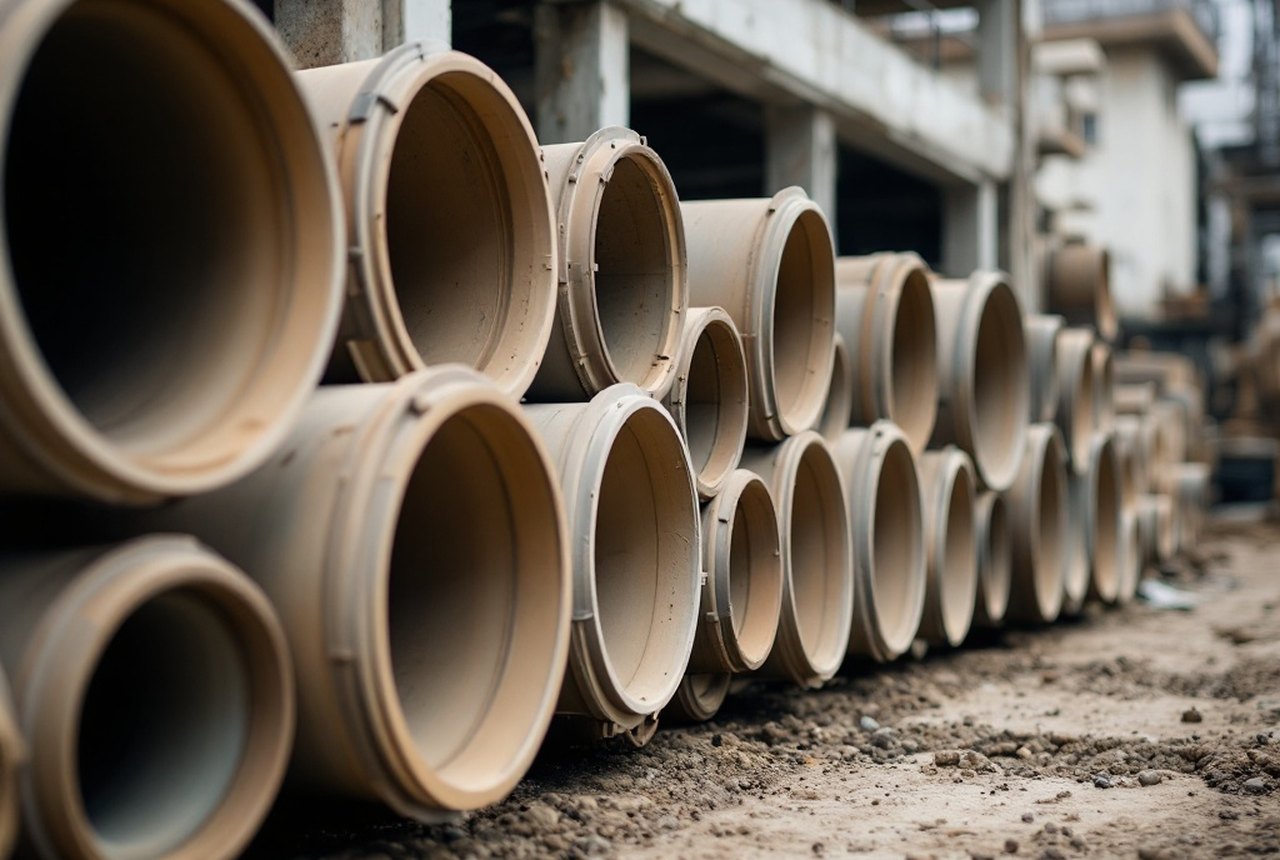
Clay is one of the most democratic raw materials on Earth — cheap, globally abundant, and astonishingly versatile once fired. Shaped and kiln-hardened, it becomes the bricks that form building foundations, the roof tiles that shed rain, the terracotta cladding on city facades, and the drainage pipes running unseen beneath streets and gardens. Stoneware, fired at higher temperatures than earthenware, undergoes a process called vitrification: the clay body becomes glassy, dense, and nearly impervious to moisture and aggressive chemicals. This makes stoneware the material of choice for sanitary fixtures — bathtubs, sinks, toilets — as well as underground sewerage systems, chemical absorption towers, and cable sheathings. It is generally less expensive than competing industrial materials, though its one significant drawback is brittleness: once broken, a stoneware component has no salvage value.
Whitewares occupy a finer niche within the traditional family. Fired to a crisp white or off-white finish, these dense, low-porosity ceramics possess excellent dielectric strength, meaning they resist electrical current efficiently. Spark plugs — which must fire reliably thousands of times per minute inside an engine operating at extreme heat — are made from alumina whiteware. So are the insulators strung along high-voltage power lines and the laboratory crucibles used in chemical analysis worldwide.
Glass, strictly speaking, is an amorphous ceramic: a supercooled silica melt that never crystallises. Its transparency makes it extraordinary, but it earns its place in the ceramic family through shared chemistry and processing logic. From the insulating panels in oven walls and rooftop glazing to the laminated safety glass in aircraft windscreens and submarine portholes, glass combines thermal resistance, chemical inertness, and optical clarity in ways no polymer or metal can replicate.
03Electricity, Magnetism, and the Functional Revolution
Advanced ceramics began their rise to prominence in earnest during the 1970s, when improvements in sintering technology and materials science gave engineers far finer control over ceramic microstructures. The result was a generation of functional ceramics — materials that don't merely provide structure but actively perform an electrical or mechanical role.
The most celebrated of these are piezoelectric ceramics, most famously barium titanate. Apply mechanical pressure to a piezoelectric ceramic and it generates an electrical signal; apply a voltage and it deforms with remarkable precision. This two-way conversion underpins an enormous range of devices: sonar transducers on naval vessels, ultrasonic cleaners in jewellery shops, medical imaging probes, precision pumps in laboratory instruments, and the oscillators that keep electronic circuits running at stable frequencies. Closely related ferroelectric ceramics appear in non-volatile computer memory and microphones, while ferrites — magnetic ceramic compounds based on iron oxide — form the cores of inductors, transformers, and antenna components in everything from radios to mobile base stations.
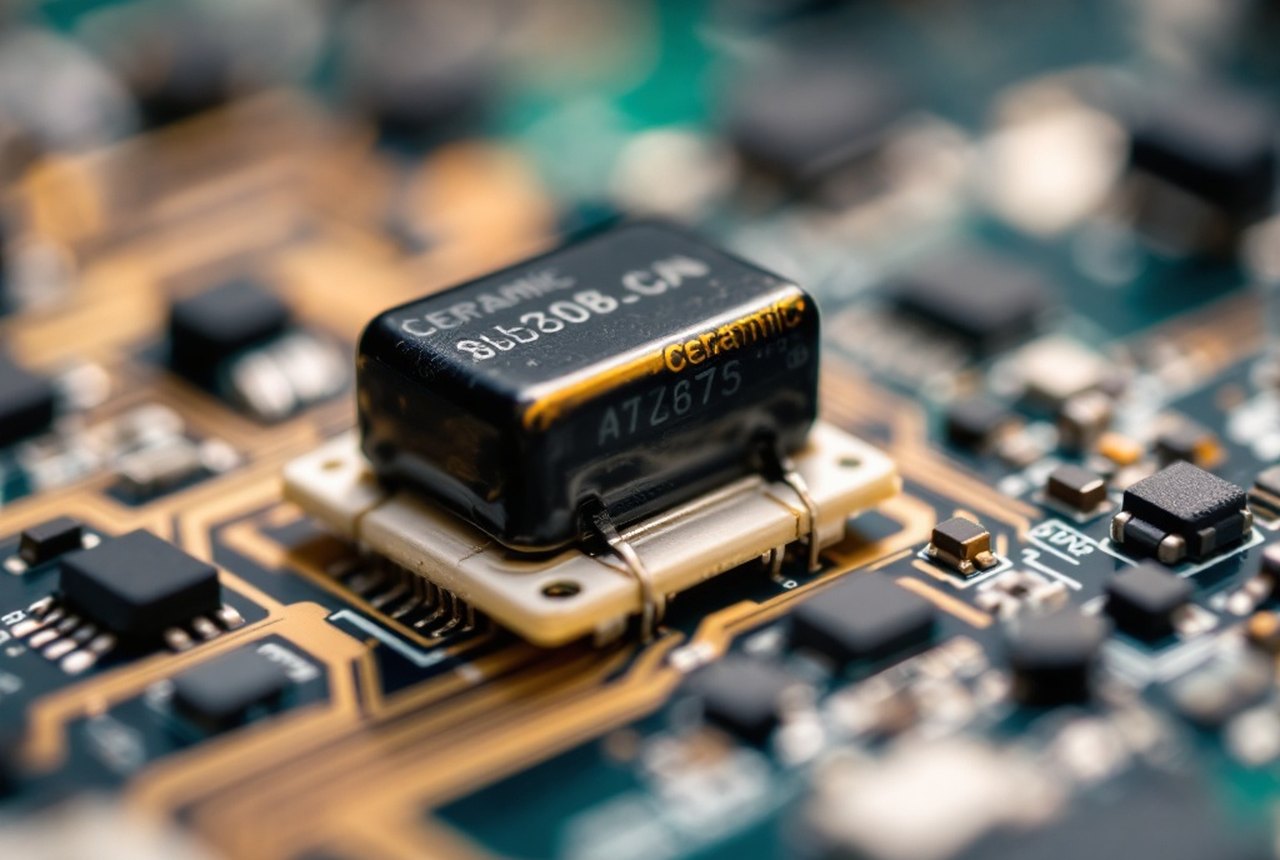
Then there are ceramic capacitors. These small, seemingly unremarkable components are embedded in virtually every circuit board manufactured today, and their reliability in extreme temperatures and miniaturised form factors has made them irreplaceable in consumer electronics. When you use a laptop, turn on a television, or run a blender, you are, without knowing it, depending on ceramics.
Chronology
- 1911Superconductivity first discovered in metals at near-absolute-zero temperatures
- 1970sModern ceramic science accelerates; new sintering technologies drive industry growth
- 1980sHigh-temperature ceramic superconductors demonstrated using copper-oxide compounds
- 1987Nobel Prize in Physics awarded for high-temperature superconductor discovery
- PresentAdvanced ceramics serve electronics, aerospace, biomedical, and automotive sectors at scale
04Superconductors, Heat Shields, and the Human Body
Superconductivity — the ability to conduct electricity with essentially zero resistance — was first discovered in metals in 1911. For decades it remained a laboratory curiosity, requiring cooling to within a few degrees of absolute zero. The breakthrough came in the 1980s, when researchers demonstrated that certain copper-oxide ceramic compounds could achieve superconductivity at comparatively high temperatures, still cold by everyday standards but manageable with liquid nitrogen rather than liquid helium. This discovery, recognised with the Nobel Prize in Physics in 1987, catalysed research into ceramic superconductors that continues to this day. Among the technologies that have benefited are magnetic levitation (maglev) rail systems and advanced medical imaging equipment.
Structural and thermal ceramics bring their own drama. The heat shield tiles bonded to the underside of NASA's Space Shuttle orbiters were made from silica ceramic fibres — lightweight, yet capable of absorbing the savage temperatures generated by atmospheric re-entry and protecting the aluminium airframe beneath. On a less cinematic but equally critical note, ceramics transparent to radar waves are moulded into radomes — the streamlined housings that protect radar antennas on military aircraft and naval vessels, allowing signals to pass through unimpeded while shielding sensitive electronics from the elements.
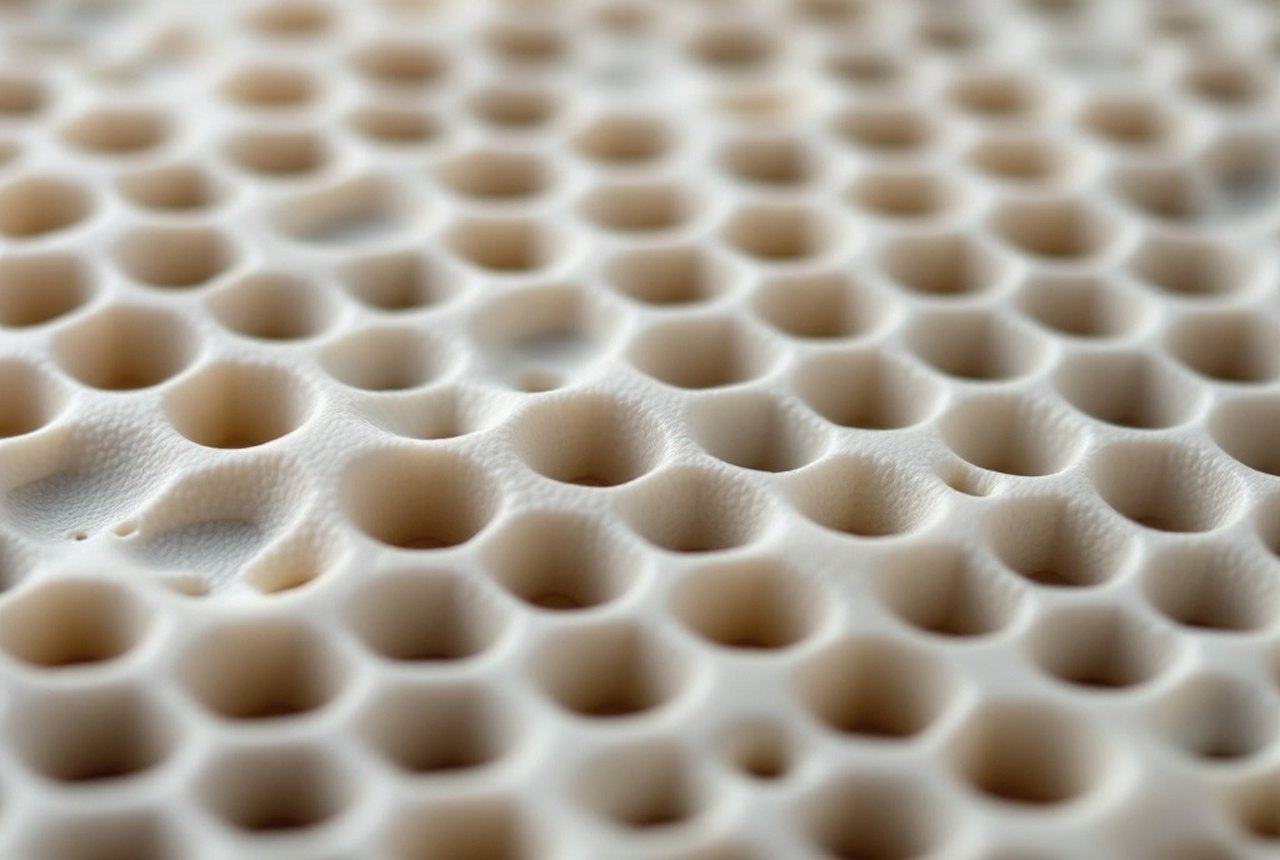
In the automotive world, the ceramic honeycomb inside a catalytic converter — a thin-walled alumina or cordierite substrate coated with platinum and palladium catalysts — converts toxic exhaust gases into carbon dioxide and water vapour. As electric vehicles proliferate, ceramics are moving into new roles: battery separator components, power electronics substrates, and thermal management systems.
Perhaps the most intimate application is bioceramics — ceramics engineered to exist inside the human body. High-purity alumina has been used in dental implants for decades, bonding chemically to natural tooth structure to create restorations of exceptional strength. Toughened zirconia now provides the bearing surfaces in hip and knee replacement joints, where its hardness, smoothness, and chemical inertness deliver long service life within a joint that may cycle millions of times per year. Porous bioceramics, engineered with a controlled network of channels, serve as scaffolds in bone grafts: surrounding tissue grows into the structure, eventually integrating the implant with the patient's own skeleton. These are not passive materials — they participate actively in healing.
05The Horizon: Printing, Nano-Engineering, and What Comes Next
The ceramic industry is not standing still. Additive manufacturing — 3D printing with ceramic powders — now allows engineers to produce geometries that traditional pressing and sintering cannot achieve, opening possibilities in customised implants, intricate aerospace components, and novel electronic substrates. Nano-scale ceramic engineering, in which particle sizes are controlled below 100 nanometres, is producing materials with mechanical and electrical properties that would have seemed extraordinary even a generation ago.
Alfred University in Alfred, New York — one of the world's leading centres for ceramic education and research — and Penn State University Park, home to research programmes across materials science and engineering, represent the kind of institutional investment that keeps ceramic innovation moving forward. From the clay bricks in a building's foundation to the ceramic capacitors in a smartphone to the bioceramic scaffold quietly knitting itself into a patient's spine, this is a material family that has defined human civilisation from its earliest fired pots to its most advanced technologies — and shows no sign of stepping aside.