01A Beginning Written in Fire
Long before writing, before bronze, before the wheel, human beings were making ceramics. The earliest known fired ceramic objects date to around 24,000 BC — small figurines discovered at the Moravian site of Dolní Věstonice in what is now the Czech Republic, shaped from clay and hardened in primitive hearths. That act of transformation, taking a soft, pliable earth and rendering it permanent through heat, is arguably one of the defining moments in human technological history.
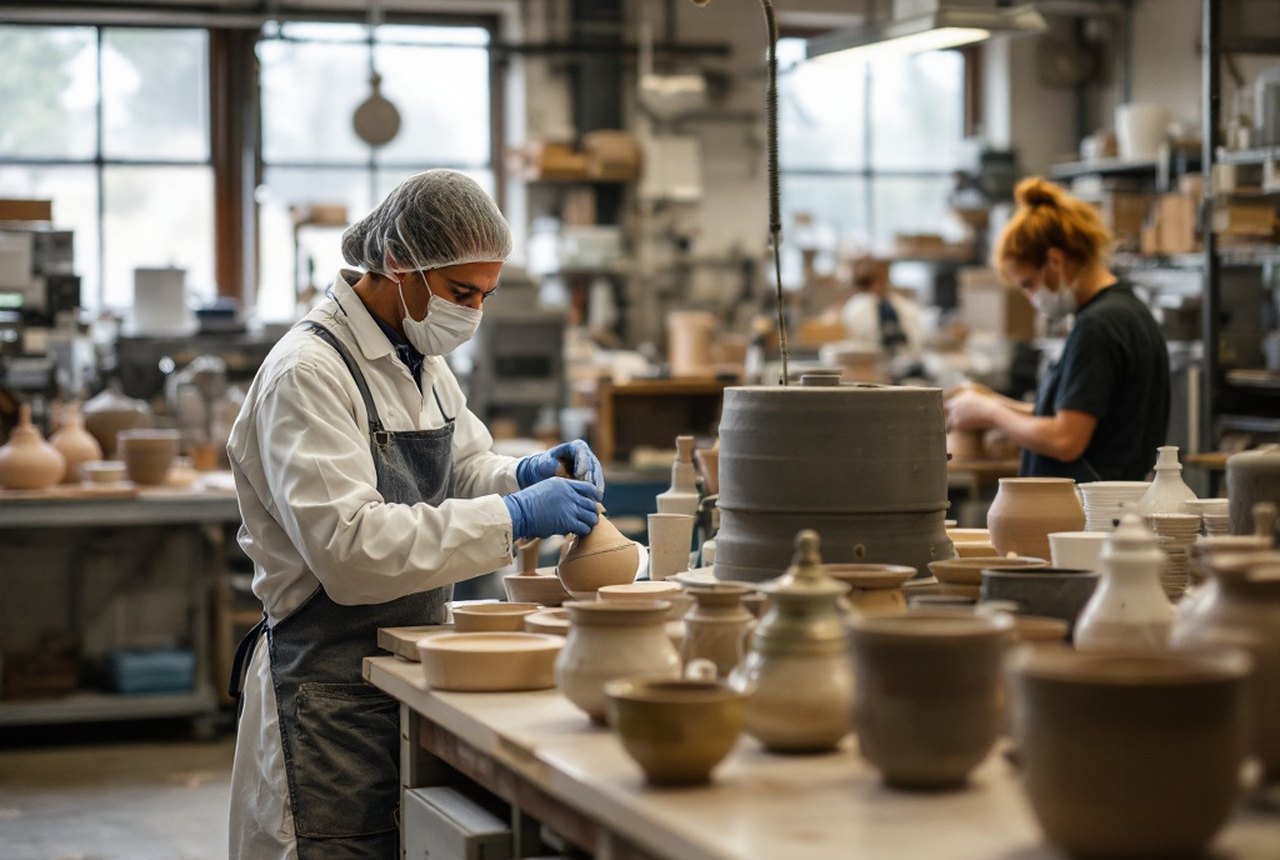
For millennia, ceramics remained primarily the domain of the potter. By around 3000 BC, fired clay vessels were central to the agricultural revolutions of Mesopotamia, the Indus Valley, and Egypt — storing grain, carrying water, enabling trade across vast distances. Pottery shards endure long after wood rots and textiles decay, which is precisely why archaeologists treasure them: they are among the most durable records of how people lived. A broken amphora from an ancient harbour tells us not only what a civilisation ate, but how far it traded and how it organised its economy.
Yet to understand ceramics only as ancient craft is to miss one of the great stories in modern science. The same fundamental chemistry — inorganic, non-metallic solids hardened by heat — now underpins some of the most demanding engineering challenges on the planet. The journey from those Palaeolithic figurines to the components inside a jet engine is astonishing, and it begins with understanding what ceramics actually are.
02What Makes a Ceramic a Ceramic
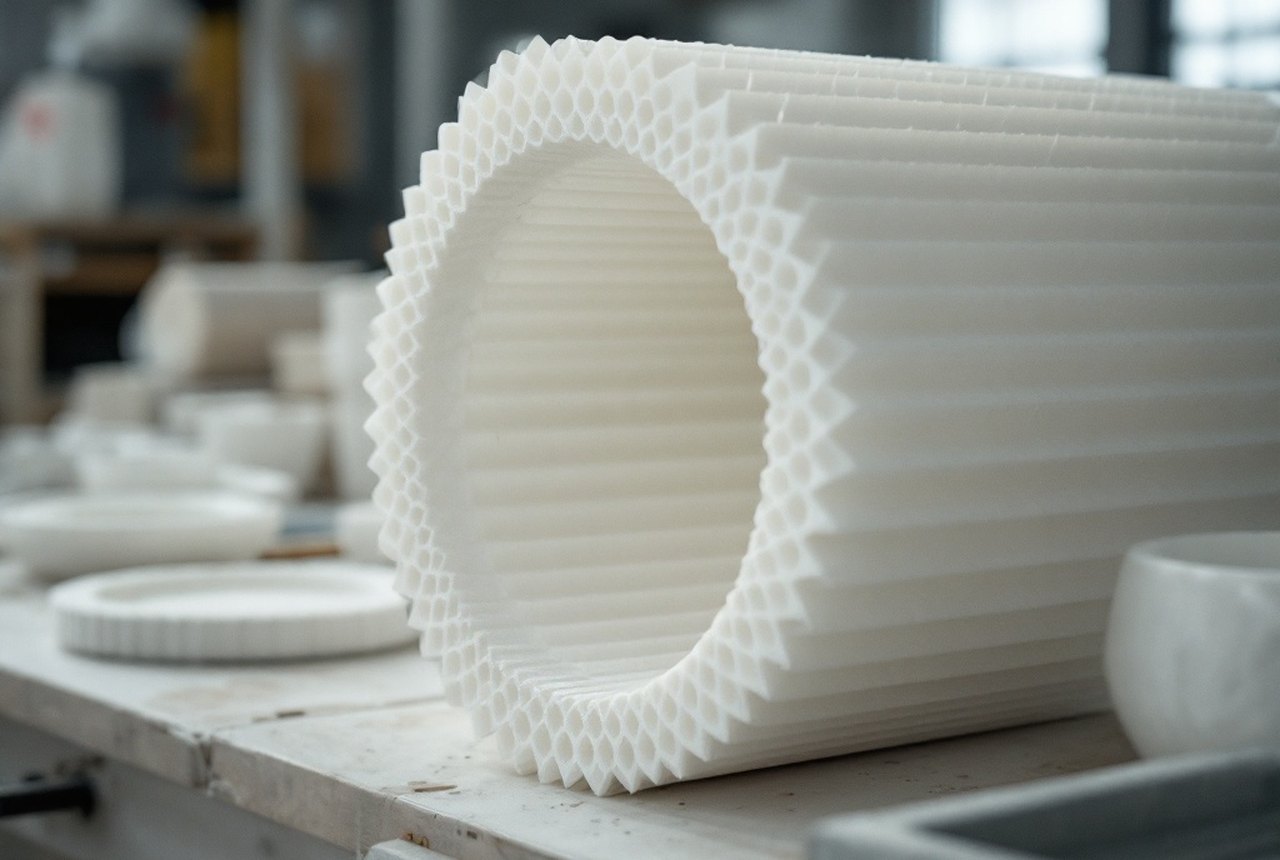
At their core, ceramics are inorganic, non-metallic solids whose properties emerge from heat treatment. Fire clay at a low temperature and you get earthenware, porous and warm. Push that temperature higher until the material vitrifies — until it becomes glassy, dense, and non-porous — and you approach the stoneware and porcelain that have graced tables and galleries for centuries. But keep engineering the composition, refining the purity, and controlling the microstructure, and you arrive at advanced ceramics: materials so precisely tailored that their behaviour can be predicted and exploited with extraordinary accuracy.
The distinction between traditional and technical ceramics is not merely one of degree. Oxide ceramics — built from metal oxides such as alumina (aluminium oxide) or zirconia (zirconium dioxide) — offer remarkable thermal and electrical properties. Non-oxide ceramics, which include carbides, nitrides, and borides, are among the hardest materials ever made, rivalling diamond in their resistance to wear. Both families share the traits that make ceramics so useful in extreme environments: they are hard, they resist heat far beyond the limits of most metals, they are chemically inert, and they can be engineered to insulate or conduct electricity as required.
That combination, unique among common engineering materials, is what drove researchers and engineers throughout the twentieth century to push ceramics into entirely new territories.
03Six Sectors Where Ceramics Are Indispensable
Modern technical ceramics carry responsibilities that most people never see but constantly benefit from. Consider six of the sectors where they work hardest.
Aerospace may be the most spectacular application. Aircraft, satellites, and missiles demand structural components that endure violent temperature swings and intense mechanical stress while keeping weight to a minimum. Ceramic heat shields protect spacecraft from the searing temperatures of atmospheric re-entry — temperatures that would destroy metals outright. The tiles that once covered NASA's Space Shuttle orbiters were ceramic, chosen precisely because they could absorb and release heat without conducting it into the airframe beneath.
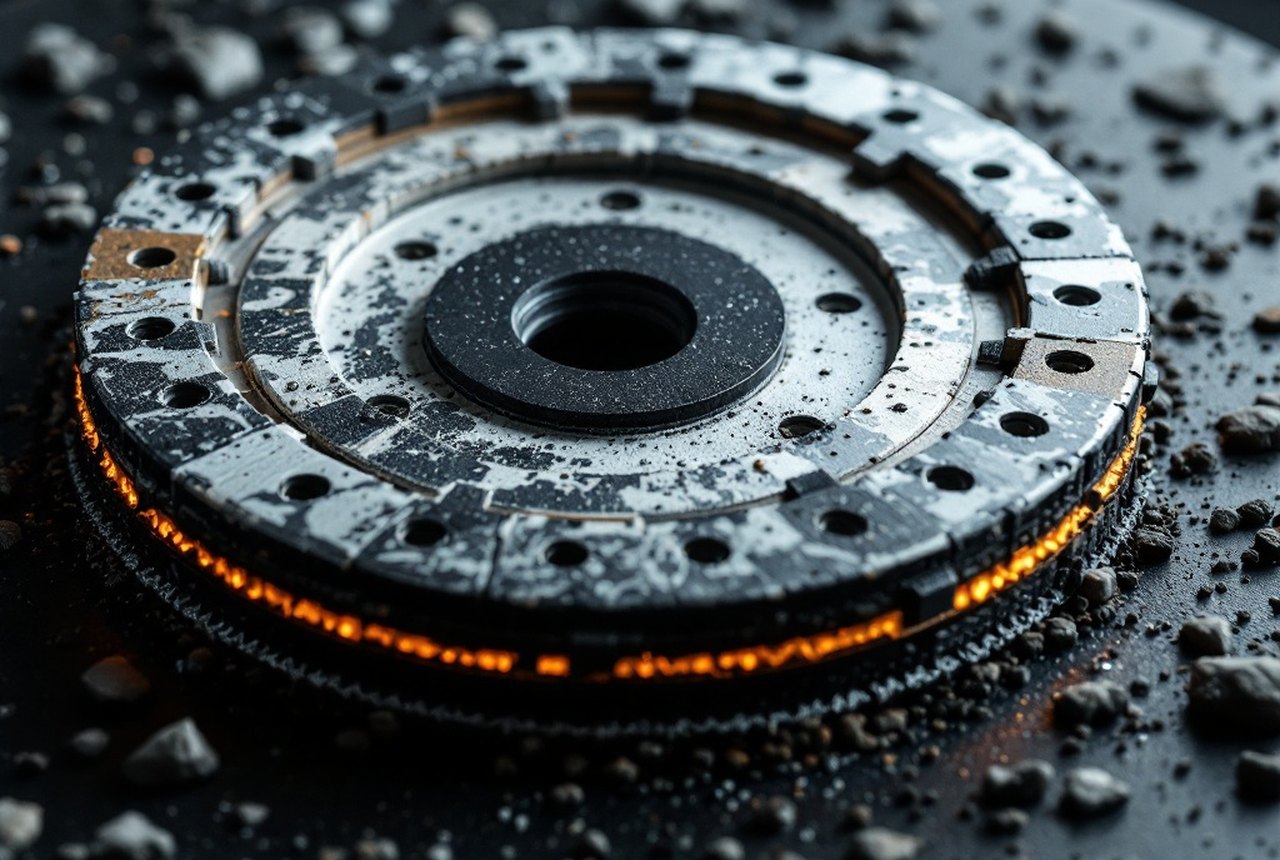
Automotive engineering brings ceramics closer to everyday life. Carbon-ceramic brake discs, now standard on many high-performance road and racing cars, offer dramatically better fade resistance than conventional cast iron under repeated heavy braking. They also shed weight from an unsprung corner of the vehicle, improving handling. Engine components in turbochargers and exhaust systems similarly rely on ceramics to survive temperatures and pressures that conventional metals cannot sustain reliably over time.
Electrical engineering owes a quiet but enormous debt to ceramics. Hard and soft magnetic ferrites — iron-oxide ceramic compounds — have been workhorses of electronics for decades, enabling the compact inductors and transformer cores inside virtually every piece of consumer electronics. Piezoelectric ceramics convert mechanical stress into electrical signals and vice versa, making them essential to ultrasound imaging, precision actuators, and sensors of all kinds. Without ceramic insulators and substrates, the miniaturisation that Jack Kilby and Robert Noyce pioneered when they independently invented the integrated circuit in the late 1950s would have been far harder to achieve in practice.
Pharmaceutical manufacturing provides a less glamorous but critically important application. Ceramic parts replace metal components in high-pressure mixing, milling, and processing machinery. Metals can shed microscopic particles or react with sensitive compounds; ceramics, being chemically inert, do neither, protecting both the product and the patient.
Environmental engineering increasingly depends on ceramic membranes — porous ceramic filters capable of separating contaminants from water with exceptional durability and chemical resistance. Unlike polymer membranes, ceramic versions can be cleaned aggressively, sterilised, and reused for years. As the global demand for clean water intensifies, ceramic membrane technology is becoming a cornerstone of water treatment infrastructure. On the emissions side, ceramic particulate filters trap soot particles from diesel engine exhausts, playing a significant role in reducing urban air pollution.
Food processing, finally, uses ceramics in ways that combine hygiene with sheer robustness. Cutting blades, conveyor components, and labelling and packaging machinery all benefit from ceramic parts that resist wear, tolerate cleaning chemicals, and carry no risk of metallic contamination entering the food supply. In an industry where sterility and longevity are equally non-negotiable, ceramics quietly earn their place on every production line.
Chronology
- ~24,000 BCearliest known fired ceramic figurines, Czech Republic
- ~3000 BCceramic vessels central to Mesopotamian, Indus Valley, and Egyptian civilisations
- Late 1950sintegrated circuit invented; ceramic substrates and insulators enable miniaturisation
- 20th centurytechnical ceramics engineered for aerospace, electronics, and medicine
- Todayadvanced ceramics critical across aerospace, automotive, electronics, pharma, environment, and food sectors
04A 26,000-Year-Old Material Still Defining the Frontier
It is worth pausing to appreciate the strangeness of that span. The same essential material that a person in ancient Mesopotamia pressed between their hands to shape a storage jar is, in refined and engineered form, helping American Superconductor develop high-temperature superconducting cables, sheathing radar antennae in protective radomes on military aircraft, and forming the biocompatible scaffolds that allow bone to regrow around ceramic medical implants. The chemistry has been refined beyond recognition; the underlying principle — inorganic, non-metallic, transformed by heat — has not changed in 26,000 years.
What makes ceramics so durable as a category of material, across so many millennia and so many applications, is precisely this versatility. No single metal or polymer family spans the range from hand-thrown pottery to spacecraft heat shields to artificial hip joints. Ceramics do, because the fundamental properties that emerge when you fire an inorganic solid — hardness, thermal stability, chemical inertness, tunable electrical behaviour — happen to be exactly what an enormous range of human problems requires.
Institutions like Alfred University in Alfred, New York, and Penn State University Park have built entire research programmes around pushing ceramic science further still, exploring nanocomposites, biomimetic structures, and new phase-transformation strategies that continue to expand what the material can do. The story is, emphatically, not finished. In a world searching for lighter aircraft, cleaner water, longer-lasting medical implants, and more efficient electronics, ceramics remain as indispensable as they were the day someone first discovered that fire could turn soft clay into something that lasted forever.