01Fire and Clay: A Technology That Would Not Stand Still
Few materials can claim a history as long, or as restless, as ceramics. The word itself conjures images of pottery wheels and glazed bowls, yet the real story reaches back to a time before cities, before writing, before agriculture. Around 24,000 BC, in what is now the Czech Republic, people were packing clay around animal and human figurines and firing them in ground kilns — producing what archaeologists regard as the earliest known fired ceramics on Earth. It is a humbling thought: the same fundamental impulse that drives a contemporary studio ceramicist in York or Alfred, New York, first stirred in a Paleolithic hunter who noticed what heat could do to earth.
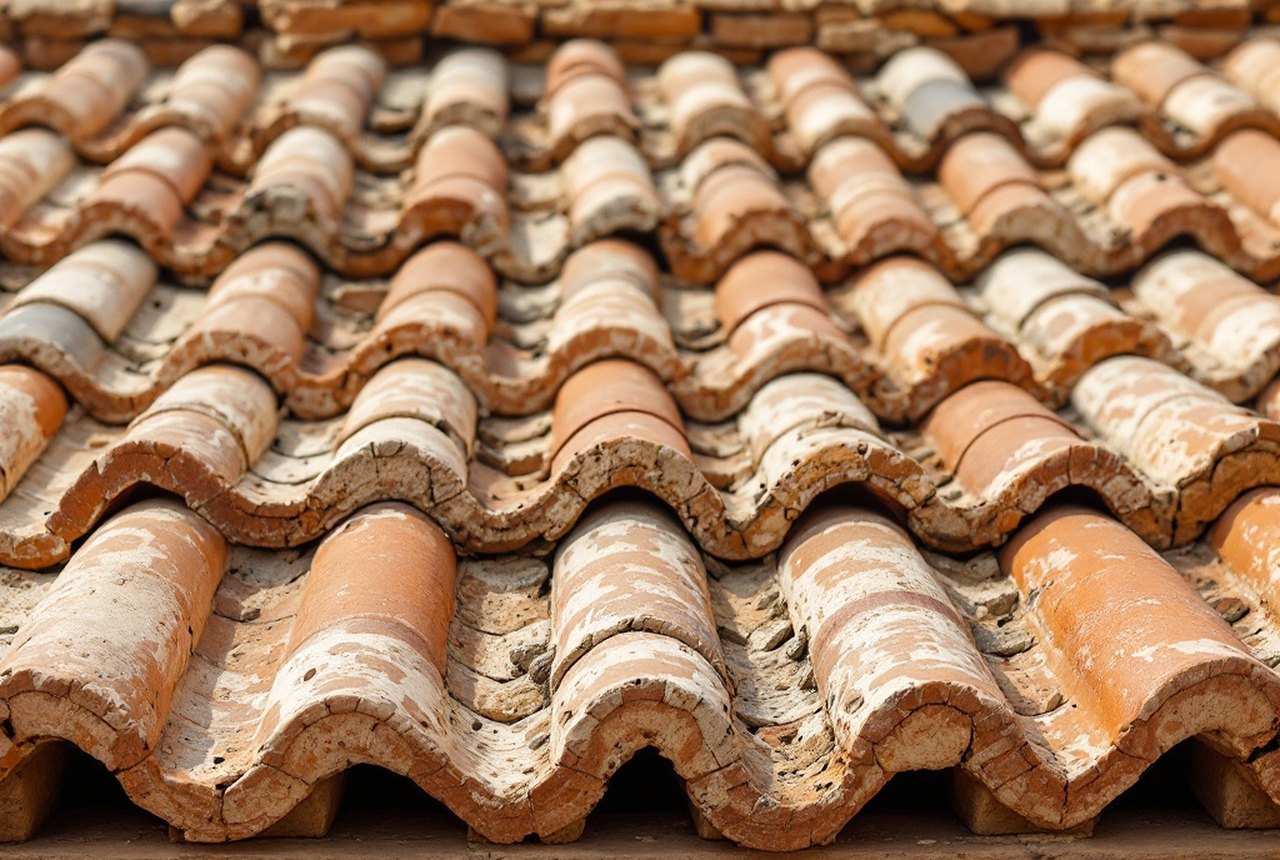
Roughly ten thousand years passed before that impulse became truly utilitarian. Around 14,000 years ago, as settled communities began to take root across Mesopotamia and the Indian subcontinent, the demand for durable building materials gave rise to ceramic roof tiles. Clay, once shaped into objects of ritual or beauty, was now sheltering families from the rain. Not long after, the great river civilisations of Egypt and the Indus Valley were producing vitrified storage vessels, decorative wares, and architectural elements that have survived to the present day — not because their makers were lucky, but because fired ceramic is extraordinarily difficult to destroy. Pottery shards endure long after wood, textiles, and metal have vanished, which is precisely why they remain the most abundant artefact in the archaeological record.
What unites a Mesopotamian tile-maker with an engineer designing spacecraft components today? At its heart, ceramics is the same thing it has always been: inorganic, non-metallic solids shaped and hardened by heat. The chemistry has grown vastly more sophisticated, but the essential principle — that fire transforms earth into something permanent — has never changed.
02The Twentieth Century's Quiet Revolution
For most of human history, the development of ceramics was a slow, empirical process: craftspeople learned by doing, refining techniques across generations without a mathematical framework to explain why one firing temperature produced a stronger vessel than another. The twentieth century changed all of that with remarkable speed.
As materials science matured into a rigorous discipline, engineers began borrowing techniques from metallurgy and applying them to ceramic systems. Processes that had long been used to strengthen metals — quenching (rapid cooling to lock in a desired microstructure), tempering (controlled reheating to reduce brittleness), and phase transformation (deliberately inducing a shift in a material's crystal structure to enhance toughness) — were successfully adapted to ceramics. The results were startling. Materials that had historically been prized for hardness but feared for brittleness became significantly more impact-resistant and, in some engineered forms, genuinely ductile.
Military demand accelerated the pace. During the 1940s, the urgent need for lightweight, high-strength structural materials drove the development of glass-fibre reinforced composites. By the 1960s, high-performance ceramic composites were entering aerospace and industrial applications — heat shields for spacecraft, radomes protecting radar antennae on aircraft, refractory linings in furnaces operating at temperatures that would liquefy most metals. The Sydney Opera House's famous shell roofs, completed in 1973, used over a million ceramic tiles precisely because no other material could combine structural elegance with long-term weather resistance so effectively. Ceramic was no longer just a craft material; it was engineering infrastructure.
03Three Families, Countless Applications
Today, advanced ceramics are broadly organised into three families, each with distinct characteristics and industrial roles.
Oxide ceramics — compounds built around metal oxides such as alumina (aluminium oxide) and zirconia (zirconium dioxide) — offer exceptional thermal and chemical stability. Alumina is used in everything from spark plugs to biomedical implants; zirconia forms the basis of the extraordinarily hard watch cases produced by manufacturers including Apple, and is also used in hip-replacement joints because its surface is biocompatible enough to bond with living bone tissue.
Non-oxide ceramics — carbides, nitrides, and borides — deliver exceptional hardness and heat resistance. Silicon carbide and silicon nitride are found in cutting tools, engine components, and the carbon-ceramic brake discs fitted to high-performance automobiles, where they must absorb enormous frictional energy without deforming or failing.
Ceramic composites are the most architecturally complex family: engineered combinations of ceramic matrices and reinforcing phases — sometimes fibre, sometimes particulate — designed to outperform metals in weight-critical applications. They appear in aircraft engine components, industrial gas turbines, and armour systems, offering a strength-to-weight ratio that metals simply cannot match.
Across all three families, advanced ceramics increasingly surpass metal-based systems on both performance and cost-effectiveness — a combination that explains their rapid adoption across aerospace, automotive, electronics, and medicine. Ceramic cogs, bearings, and precision components appear in watches and engines wherever hardness and low weight are simultaneously required.
Chronology
- ~24,000 BCearliest known fired ceramics: figurines in ground kilns
- ~14,000 BCceramic roof tiles emerge in Mesopotamia and Indian subcontinent
- 1940sglass-fibre reinforced composites developed under military demand
- 1960shigh-performance ceramic composites enter aerospace and industrial use
- 1973Sydney Opera House completed with over one million ceramic tiles
- 1990snanocomposites and biomimetic strategies open new frontier
- 2010global nanocomposite production exceeds 600,000 tonnes annually
04The Nanocomposite Frontier
If the twentieth century belonged to engineered ceramic composites, the twenty-first may belong to nanocomposites: materials engineered at the molecular scale, incorporating particles smaller than 100 nanometres. At these dimensions, quantum and surface effects dominate, and materials behave in ways that bulk ceramics cannot approach.
Applications already in commercial use range from the familiar to the industrial. UV-protection gels, scratch-resistant paints, fire-retardant coatings, and high-strength fibres all draw on nanocomposite ceramic chemistry. By 2010, global nanocomposite production had exceeded 600,000 tonnes annually — a figure that reflects not niche laboratory curiosity but genuine, large-scale manufacturing adoption.
The most compelling research, however, looks further ahead. Scientists are working to combine fluorescent and magnetic nanoparticles within a single composite particle — a material that could make a tumour visible in an MRI scanner and simultaneously guide a surgeon's eye during the operation itself. The implications are profound: a substance derived from the same ancient lineage as a Mesopotamian roof tile might one day navigate the bloodstream on a therapeutic mission. It is, in the most literal sense, the cutting edge of an industry that began with someone pressing clay around a small clay animal and pushing it into a fire.
The arc from those Paleolithic ground kilns to nanoscale oncology spans roughly 26,000 years. What is striking is not simply that ceramics has endured, but that it keeps accelerating — each century finding new things to ask of the most ancient engineered material in the world.