01Shaped by Hand, Hardened by Fire
The story begins not with engineering, but with wonder. Around 24,000 BC — long before agriculture, writing, or the wheel — early humans in what is now the Czech Republic were pressing clay into figurines and placing them in fire. The clay came out rigid, permanent, transformed. Whatever they intended by the act, they had discovered one of the most consequential principles in the history of materials: heat changes clay into something entirely new.
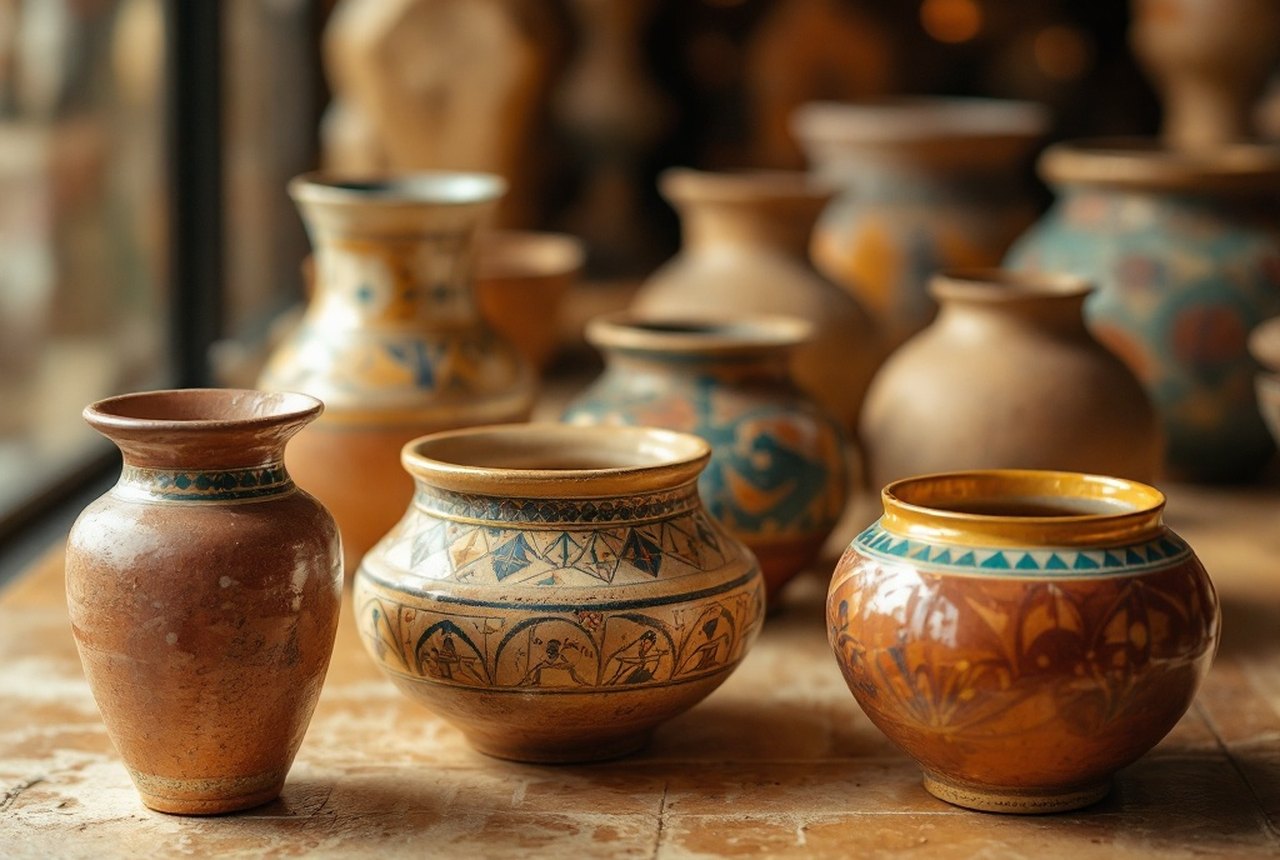
For thousands of years that discovery remained gestural, almost experimental. But it was never forgotten. By around 14,000 BC, communities in Mesopotamia and the Indus Valley were manufacturing roof tiles — among the earliest evidence that ceramics had moved from curiosity to construction. Pottery vessels and clay bricks entered common use around 9,000 BC, enabling settled life in ways that are easy to underestimate. A fired clay jar doesn't just hold grain; it protects it from moisture, vermin, and time. The ceramic vessel was, in its moment, as disruptive a technology as the hard drive.
Glazing arrived next — discovered in Egypt sometime between 5,000 and 8,000 BC, most likely as an accidental by-product of kiln overfiring, when silica-rich ash fused into a glassy skin on the clay surface. Glass itself emerged from this same overfiring phenomenon, and by around 1,500 BC humans were shaping it intentionally into distinct objects. Two materials — glass and glazed ceramic — born from the same ancient accident, branching into different futures.
02The Long Middle: From Tiles to Insulators
After those early leaps, ceramic innovation settled into a slower rhythm — centuries passing between major breakthroughs. The development of synthetic refractory materials around 1550 AD was one such pivotal moment. Refractories are heat-resistant ceramics capable of lining the extreme environments inside furnaces and kilns, and their arrival enabled industrial-scale production of glass, cement, and steel. The Industrial Revolution, in other words, depended on ceramics to contain its own heat.
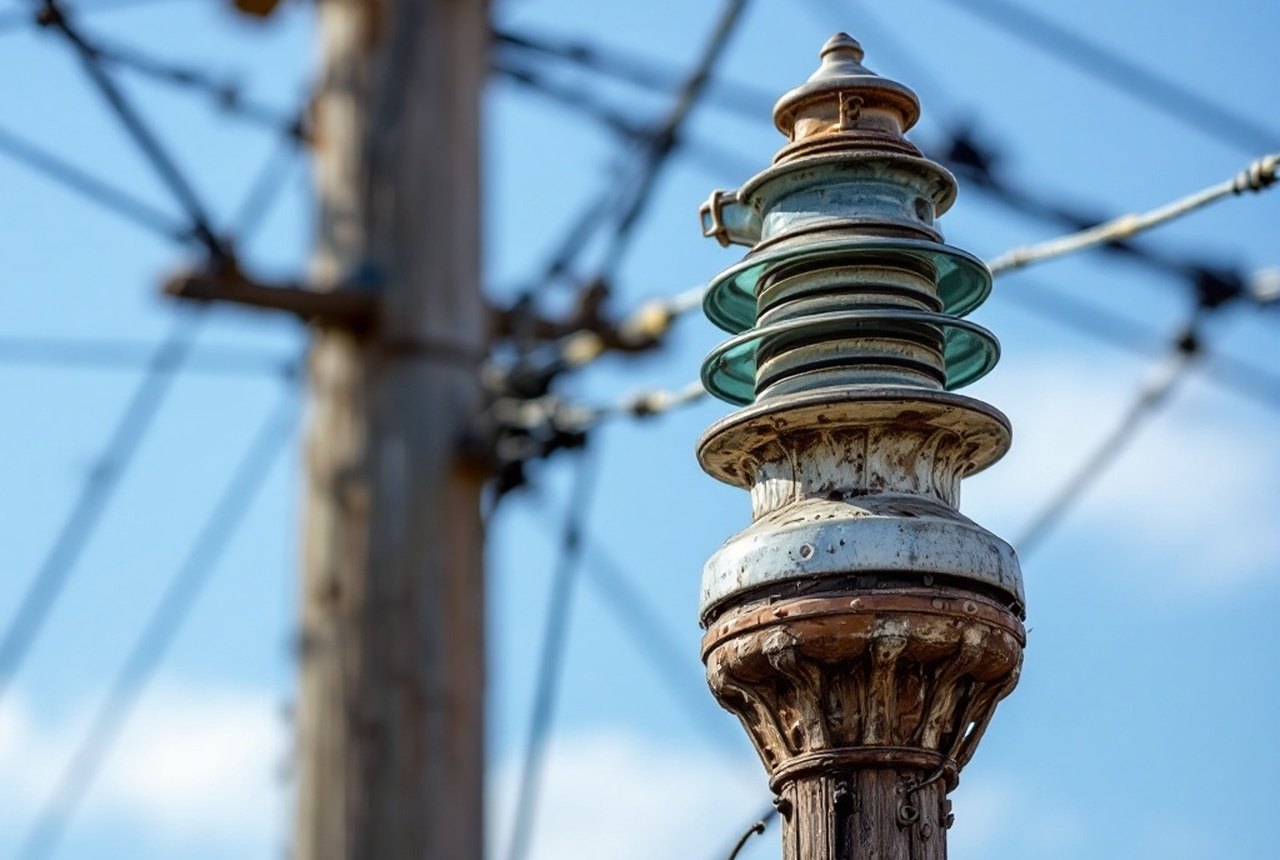
Electrification brought ceramics into an entirely new domain. In the mid-1800s, as electrical infrastructure began spreading across Europe and North America, engineers discovered that vitrified porcelain was an ideal electrical insulator — hard, non-porous, chemically inert, and capable of withstanding high voltages without conducting current. It became the material of choice for telegraph and power-line insulators, those distinctive stacked forms still visible on old utility poles today.
The spark plug — a small but critical device in every internal combustion engine — illustrated just how precisely ceramics could be engineered. By the 1920s, alumina-enriched porcelain insulators were improving spark plug reliability, surviving the punishing thermal cycles inside an engine cylinder where metals would crack or corrode. Then, in 1936, advances in low-cost, high-purity alumina production opened the door to a new category entirely: advanced ceramics, engineered not merely to tolerate heat, but to perform specific electrical, mechanical, or biological functions with extraordinary precision.
03The Twentieth Century: Ceramics Go High-Tech
The pace of ceramic innovation accelerated sharply through the twentieth century, each new technological wave pulling the material into an unexpected role.
In 1938, fibreglass was invented — a ceramic-based insulation material with an astonishing range of applications, from building insulation to boat hulls. In 1945, soft ferrite ceramic magnets were developed: iron-oxide compounds with magnetic properties that are now embedded in speakers, computer components, and telecommunications hardware worldwide. Ferrites are a quiet success story — a technology most people use daily without ever knowing it exists.
Then came the integrated circuit. In 1959, Jack Kilby at Texas Instruments and Robert Noyce at Fairchild Semiconductor independently fabricated the integrated circuit on a silicon slice. Silicon is a semiconductor rather than a classical ceramic, but the broader family of ceramic materials — alumina substrates, oxide insulators, piezoelectric components — is woven throughout modern electronics. Without advanced ceramic insulators and substrates, miniaturisation on the scale the microchip demanded would have been impossible.
Bioceramics brought the material inside the human body. In 1969, a ceramic glass formulated specifically to bond directly with living bone was developed, launching the field that now underpins hip replacements, dental implants, and bone scaffolds. The property that makes a bioceramic remarkable is not strength alone, but biocompatibility — the ability to sit inside a living system without triggering rejection.
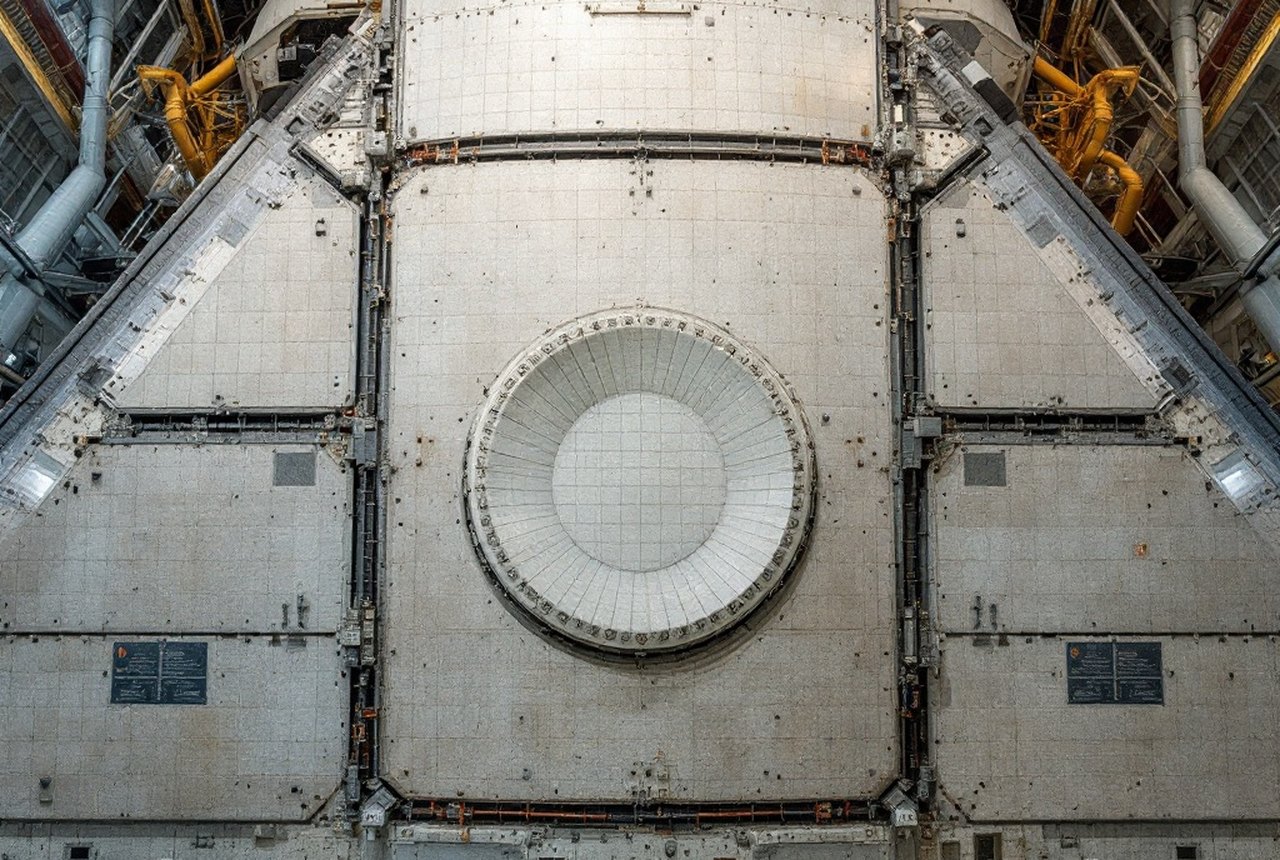
The 1970s introduced ceramic particulate filters for diesel engines, trapping soot and reducing pollution in ways that would become legally mandatory decades later. And in 1982, the Space Shuttle demonstrated something extraordinary: re-entry from orbit, at temperatures that would melt steel, was survivable — protected by a skin of more than 24,000 individually shaped ceramic tiles, each one a custom heat shield engineered to precise tolerances. The material that began as a fired clay pot was now protecting astronauts from the violence of atmospheric re-entry.
Chronology
- 24,000 BCEarliest fired clay figurines; ceramics born
- 14,000 BCRoof tiles manufactured in Mesopotamia and the Indus Valley
- 9,000 BCPottery vessels and clay bricks enter common use
- 5,000–8,000 BCGlazes discovered in Egypt; glass emerges as kiln by-product
- 1,500 BCGlass shaped intentionally into distinct objects
- 1550 ADSynthetic refractories enable industrial-scale glass, cement, and steel production
- Mid-1800sPorcelain used for electrical insulation as electrification spreads
- 1920sAlumina-enriched porcelain insulators improve spark plug reliability
- 1936Low-cost, high-purity alumina production unlocks advanced ceramics
- 1938Fibreglass invented
- 1945Soft ferrite ceramic magnets developed
- 1959Kilby and Noyce fabricate the integrated circuit
- 1969Bioceramics developed to bond with living bone
- 1970sCeramic particulate filters introduced for diesel engines
- 1982Space Shuttle re-entry protected by more than 24,000 ceramic tiles
- 1988High-temperature superconducting ceramics discovered
- 2001American Superconductor produces 400 km of superconductor wire
04Superconductors and the Accelerating Frontier
The discovery of high-temperature superconducting ceramics in 1986 was, by any measure, a shock to the scientific community. Superconductivity — the ability to conduct electricity with essentially zero electrical resistance — had previously required cooling materials to temperatures close to absolute zero, making practical applications costly and complex. Ceramic superconductors changed the equation. These were inorganic, brittle, oxide-based compounds: in other words, ceramics. Nobody expected them to superconduct at comparatively high temperatures, and their discovery triggered a surge of research that continues today.
By 2001, American Superconductor had produced some 400 kilometres of high-temperature superconductor wire — a striking demonstration that laboratory discoveries can scale into real infrastructure. Superconducting ceramics are now central to research in MRI machines, particle accelerators, and next-generation power transmission.
What the timeline reveals, when you step back from it, is not a steady progression but an accelerating one. For most of human history, ceramic innovation moved at the pace of civilisations — centuries between meaningful leaps. The modern era has compressed that cycle into decades, then years. Advanced ceramics today are no longer clay-based in any traditional sense: engineered oxides, nitrides, carbides, and composites perform functions that a medieval potter could not have imagined. They sit inside EV batteries, filter drinking water through ceramic membranes, and enable the sensors that make autonomous vehicles possible.
The material that began as a handful of wet clay, pressed into shape and set in fire, has never stopped becoming something new. That trajectory, remarkably, shows no sign of levelling off — and the next chapter is likely already forming in a materials science laboratory somewhere, waiting for its moment of heat.