01Before the Wheel: Fire, Clay, and the First Makers
The urge to shape clay and harden it with fire is almost as old as anatomically modern humans themselves. The oldest known fired ceramic objects are not pots or bowls but small figurines — animal and human forms discovered at Dolní Věstonice in what is now the Czech Republic — dating to around 25,000 years ago. These were not functional objects in any practical sense; they were cultural ones, suggesting that long before anyone thought to store grain in a ceramic vessel, people were already exploring the expressive possibilities of fired clay.
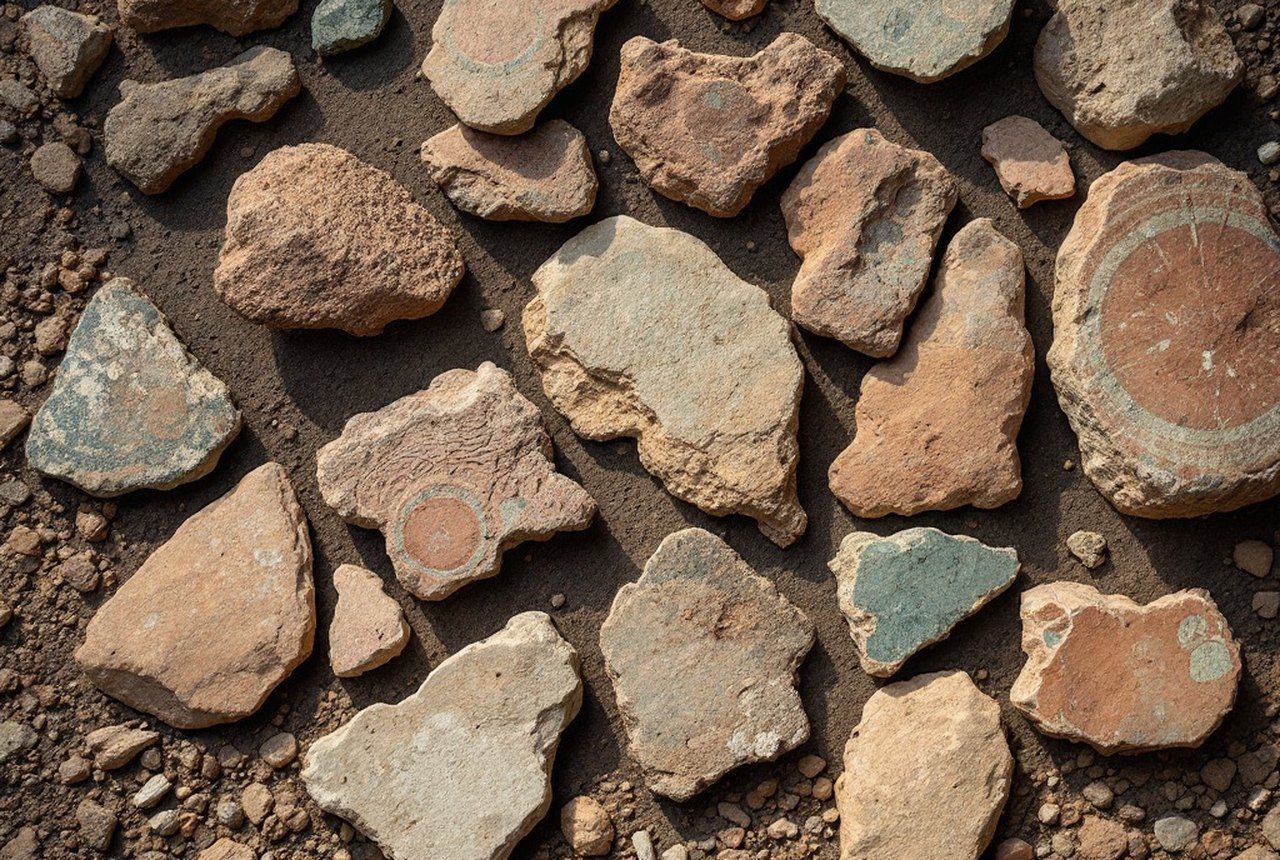
Practical vessel-making came later, but still extraordinarily early. Pottery fragments recovered from sites in Turkey push coil-built containers back to at least 6500 BC. The logic was straightforward: woven baskets leaked, stone vessels were brutally heavy, and animal skins degraded quickly. Fired clay offered something none of these alternatives could — a container that was relatively light, watertight, and capable of withstanding the heat of a cooking fire. Once communities in the ancient Near East grasped this, the technology spread with remarkable speed.
Coil-building — stacking and smoothing rope-like rolls of clay into walls — was the dominant technique for millennia. It required patience and skill but no special equipment. A potter could build almost any form imaginable: wide-mouthed storage jars, narrow-necked amphorae, shallow bowls. The limitation was symmetry. Coiled walls, no matter how carefully smoothed, were never truly round. That problem would require an entirely new invention to solve.
02The Wheel Changes Everything
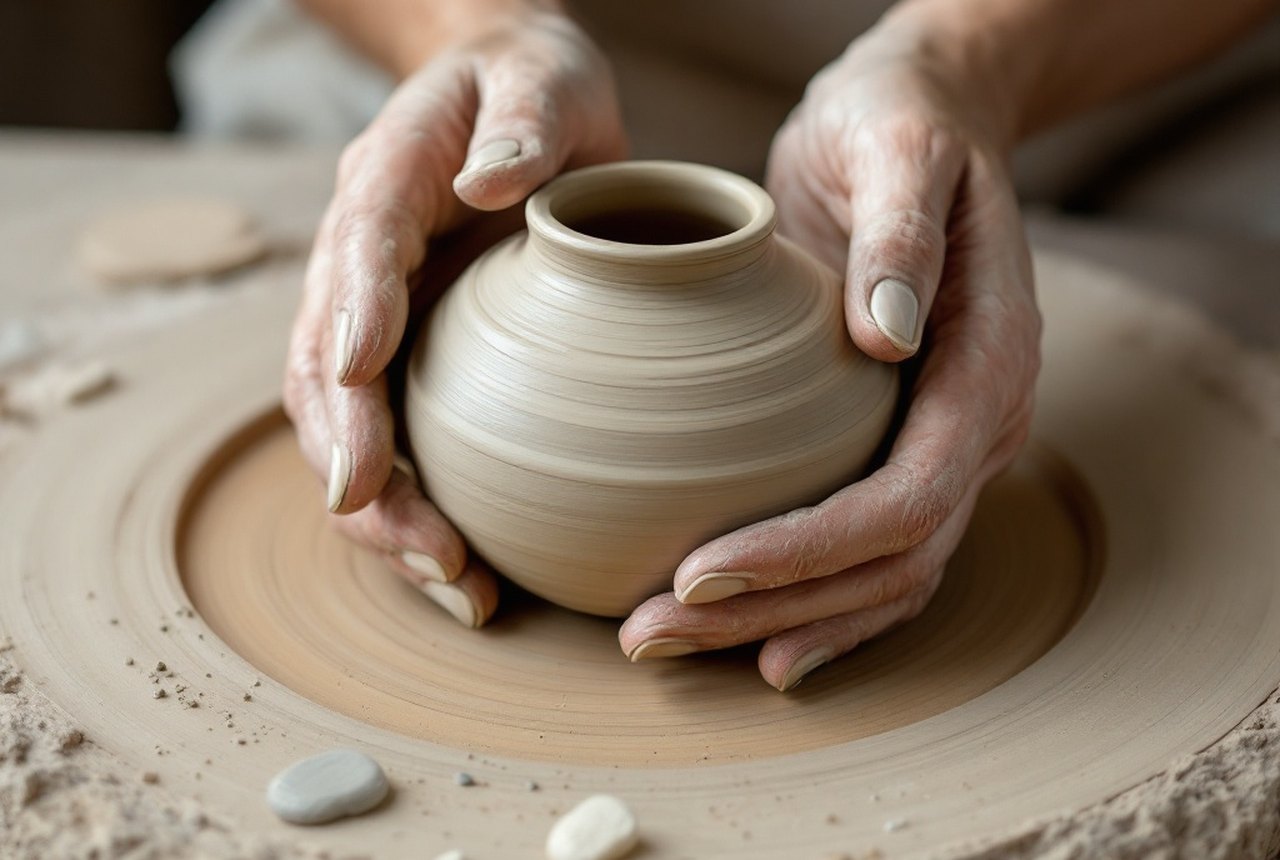
Around 3000 BC, somewhere in Mesopotamia, an unknown craftsperson mounted a heavy stone or clay disc on a pivot and discovered that a spinning surface could transform a lump of clay into a perfectly symmetrical vessel in a fraction of the time coil-building demanded. The potter's wheel — a rotating disc enabling consistent, round vessel formation — was not a single sudden invention but rather an incremental refinement of earlier tournettes, slow turntables used to rotate a vessel while building it by hand. The fast wheel, capable of being kicked up to speed and sustaining momentum, came later. But once it arrived, it changed ceramic production permanently.
Mesopotamian artisans also pioneered glazing — the application of a glassy, mineral-rich coating that, when fired, sealed the surface and made decoration permanent. By around 900 BC, glazed ceramics and decorative tiles were appearing on temple walls and palace façades across Mesopotamia, turning ceramic surfaces into a medium for image-making on an architectural scale. The shimmering glazed brickwork of the ancient city of Babylon, with its famous Ishtar Gate, would not have been possible without this knowledge.
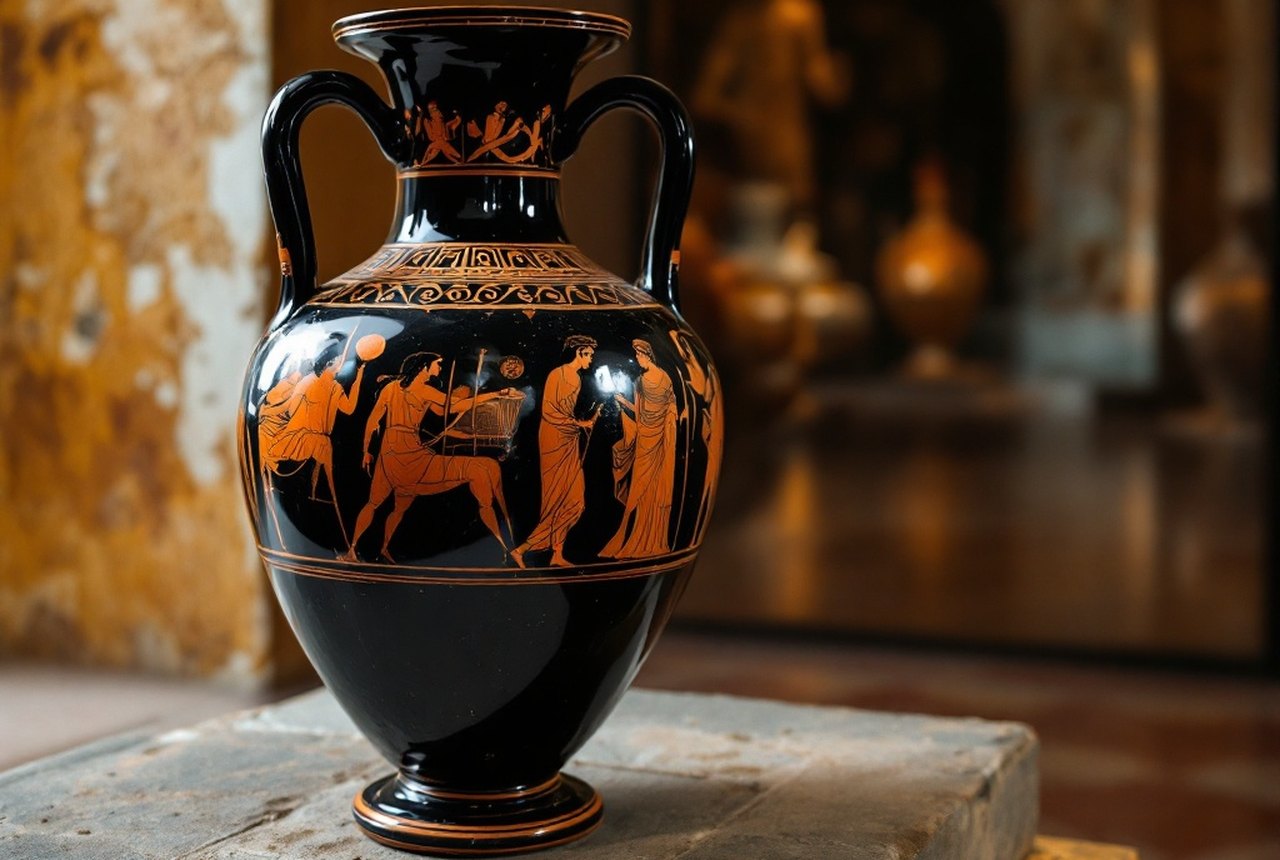
Meanwhile, Greek potters of the 5th century BC elevated ceramic decoration into one of antiquity's great art forms. Each vessel profile served a specific purpose — the amphora for olive oil and wine, the hydria for water, the kylix as a drinking cup — and each became a canvas for black-figure and red-figure narrative scenes. These were not merely pots; they were the illustrated books of their age, depicting myth, sport, ritual, and everyday life in extraordinary detail.
03The Silk Road and the Spread of Glazed Goods
By the final centuries BC and into the first centuries AD, something remarkable was happening across Eurasia. Glazed pottery was travelling. The Silk Road — that famous network of overland and maritime trade routes connecting Han-dynasty China to imperial Rome — carried silk, spices, and glass in both directions, but it also carried ceramic knowledge and ceramic goods. Glazed vessels from the Indus Valley, Mesopotamia, and China moved through Central Asian markets and into Roman hands. Roman potters, in turn, developed their own tradition of red-gloss tableware, known as terra sigillata, which spread from workshops in Gaul and Italy to every corner of the empire.
It was during this period that ceramics first became what we might recognise as a luxury commodity — objects valued not only for utility but for their beauty, their rarity, and their foreignness. A glazed Han-dynasty jar in a Roman home was a statement of cosmopolitan sophistication. The trade in such objects helped lay the social groundwork for what would follow a millennium later, when Chinese porcelain reached Europe and caused something close to collective aesthetic shock.
Chronology
- c. 25,000 BCEarliest fired figurines, Dolní Věstonice, Czech Republic
- c. 6500 BCCoil-built pottery fragments, Turkey
- c. 3000 BCPotter's wheel developed in Mesopotamia
- c. 900 BCGlazed ceramics and decorative tiles widespread in Mesopotamia
- c. 500s BCGreek vase-making and narrative decoration at its height
- 100s BC–AD 100sGlazed pottery spreads via the Silk Road
- 1500sChinese porcelain reaches Europe through Macao; "chinaware" coined
- c. 1710Meissen cracks hard-paste porcelain; c. 1790s bone china develops in Britain
04Porcelain and the European Race to Catch Up
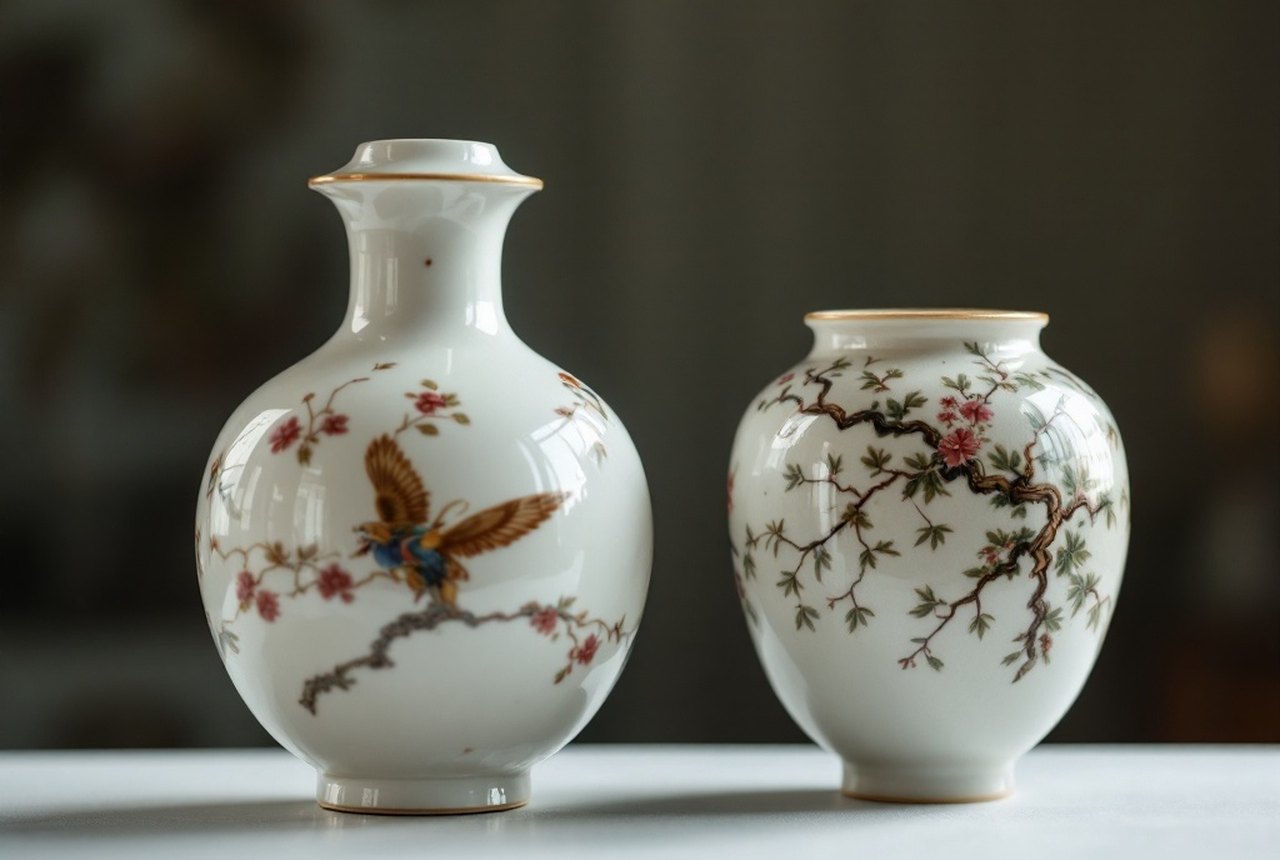
When Chinese porcelain began arriving in European markets in the 16th century, initially through the trading port of Macao and then via the great East India companies, it was unlike anything European potters could produce. Fine, translucent, brilliantly white, and harder than any earthenware or stoneware they knew, it seemed almost miraculous. Europeans began calling fine tableware "chinaware" — a name that stuck — and demand was insatiable among the aristocracy and the rising merchant classes alike.
European workshops spent generations attempting to reverse-engineer the secret. Louis XIV formally encouraged French potters to crack the formula, understanding that reliance on imported Chinese porcelain represented both a cultural vulnerability and a significant trade imbalance. French and German experimenters made progress with soft-paste porcelain — a plausible imitation — but true hard-paste porcelain, the real article, uses a specific type of clay called kaolin combined with a feldspathic rock called petuntse, both of which are fired at very high temperatures. European potters had neither the raw materials to hand nor the precise firing knowledge until the early 18th century, when deposits of kaolin were finally identified in Saxony and the Meissen manufactory cracked the formula around 1710.
In Britain, the answer took a slightly different form. Lacking its own kaolin deposits initially, English industry developed bone china — a distinct ceramic category incorporating calcined animal bone ash alongside clay and feldspathic minerals. The result was a material that achieved much of the translucency and whiteness of Chinese porcelain, while being somewhat more forgiving to produce at scale. It became the foundation of an entire industry centred in Staffordshire, and it is still manufactured to this day.
The story of ceramics, then, is not simply the story of pots. It is the story of human ingenuity applied to one of the Earth's most abundant materials — and of how a fired lump of clay became, across twenty-five thousand years, a medium for art, a vehicle for trade, and the foundation of some of the most sophisticated technologies our civilisation has ever produced.